
Bridge is a trick-taking card game for four players divided into two partnerships․ The game involves an auction phase, bidding, leading cards, and following suit․ Players aim to win at least nine tricks through strategic play, utilizing trumps and defense mechanisms․ It is a game of skill, strategy, and precise card management․ The rules ensure fair play and clarity, with specific penalties and legal moves․ Regular bridge terminology and scoring systems add depth to the gameplay․ Advanced players use high-card points and distribution analysis for optimal strategies․ Bridge requires focus, communication, and adaptability․ The primary objective is to achieve contract goals by making the required number of tricks․ The game is both challenging and rewarding, offering endless opportunities for learning․ Duplicate bridge formats offer standardized deals for competitive play․ Among new players, understanding the basic rules is critical to developing competence․ This guide outlines essential rules and strategies for mastering the game․ Whether you are experienced or just starting, grasping the fundamental principles is key to success in bridge․ This comprehensive overview serves as a foundation for further exploration of bridge rules and strategies․

The Basics of Bridge
Bridge involves four players forming two partnerships, aiming to win tricks during gameplay․ Players must follow suit when possible, and leading a card initiates each round․ Bidding systems help partners communicate and set goals for the hand․ The game blends strategy, communication, and card management for success․ Understanding basic rules ensures smooth gameplay and fair competition․
Overview of Bridge as a Trick-Taking Game
Bridge is a trick-taking game that involves four players divided into two partnerships․ The objective is to win a specified number of tricks through strategic play and communication․ Each round begins with an auction where partnerships decide the contract․ The declarer then leads the play, attempting to make the contract by winning the required tricks․ The defense players work together to prevent the declarer from achieving their goal by using defense strategies such as trumping and ruffing․ Trick composition is crucial, focusing on following suit and leading high cards when beneficial․ Success in Bridge depends on accurate card count, understanding opponents’ potential holdings, and applying effective defense mechanisms․ Effective teamwork and communication are essential to maximize trick wins and meet the contract․
Objective of the Game
In the game of bridge, the primary objective is to win the maximum number of tricks to fulfill the contract agreed upon during the auction phase․ Each partnership works collaboratively, either to achieve the contract as the declarer or to prevent it as the defenders․ The game centers on skill, strategy, and effective teamwork․ Success hinges on how well players communicate and execute their roles, ensuring that the declarer leads effectively while defenders strategically hinder the contract․ Understanding this objective is crucial for mastering bridge and enjoying its strategic depth․
Number of Players and Partnerships
Bridge is designed for exactly four players, who are divided into two partnerships․ Each partnership consists of two players sitting across from each other at the table․ The partnerships work collaboratively to achieve the objectives set during the auction and playing phases․ Players communicate through bidding, Signals, and card play to maximize their collective efforts․ This structure emphasizes teamwork, strategy, and coordination between partners to outwit the opposing team․ Effective communication and understanding are vital to success․ The partnerships’ collaboration is essential for winning the required number of tricks and achieving the contract․ The balance of power between the partnerships determines the game’s outcome․ Partnerships must adapt their strategies to exploit the opponents’ weaknesses while protecting their own․ This dynamic interplay between partnerships is a hallmark of bridge’s complexity and appeal․ The roles of partners are well-defined, with each contributing unique skills to the team․ The interdependence of partners fosters a sense of unity and shared purpose․ Partnerships are the foundation of bridge’s competitive nature, making teamwork and cooperation indispensable․ The interplay of strategies and tactics between partnerships adds depth to the game․
Deck of Cards and Deal
In the bridge card game, a standard deck of 52 cards is used, with no jokers․ The deck is thoroughly shuffled and dealt to the four players, with each receiving 13 cards․ The dealing ensures an equal distribution of cards, with each player’s hand containing a mix of suits and values․ Proper shuffling and dealing are crucial to maintaining fairness and randomness in the game․ In duplicate bridge, deals are often prearranged and passed between tables, allowing for standardized gameplay․ The organization and handling of the deck are essential to prevent errors and ensure smooth gameplay․ Understanding the deck composition and dealing process is fundamental to mastering bridge rules․ Each card’s placement in the hand impacts bidding and playing strategies, making the deal a critical starting point for success․ Players must adapt to the dealt hands, leveraging their strengths and mitigating weaknesses․ The deck’s structure and the dealing process form the foundation of bridge’s strategic elements․
Key Terms in Bridge
In Bridge, several key terms are essential to understanding the game’s mechanics and strategies:
- Deck of Cards: A standard deck of 52 cards is used, without jokers, ensuring a diverse range of cards for each player․
- Deal: Each player receives 13 cards, distributed from a well-shuffled deck to ensure fairness and randomness․
- Partnerships: Players form teams of two, working collaboratively to achieve their game objectives․
- Bidding and Auction Phase: This is the process where teams bid to determine the contract, outlining the number of tricks they aim to secure․
- Contract: The agreed-upon goal, detailing how many tricks a partnership commits to making․
- Trick: A trick is won by the highest card of the suit led; the player with the winning card leads the next trick․
- Leading and Following Suit: The player who starts a trick leads a card, and others must follow with the same suit if possible․
- Trump: A designated suit that can defeat any other suit, providing a strategic advantage in winning tricks;
- Ruffing: The use of trumps to win a trick when unable to follow suit, adding a layer of strategy to gameplay․
- High Card Points (HCP): Assesses the strength of a hand based on the number of high-value cards․
- Distribution Points:_refers to the even spread of suits, influencing gameplay and strategy․
- Setting Up for Declarer Play: Organizing cards to maximize the potential for winning tricks and achieving the contract․
- Penalty and Law 52: Rules ensuring fair play, addressing errors such as incorrect discards or failures to lead properly․
- Director: Oversees the game, enforcing rules, and making decisions to maintain game integrity․
Understanding these terms is fundamental to grasping the strategies and objectives of Bridge, enabling players to navigate the game effectively․

Bridge Game Rules: A Comprehensive Guide
Bridge is a strategic card game aiming to win tricks through bidding and gameplay․ The PDF guide covers auction phases, partnerships, and trump strategies, ensuring players follow official rules․ Penalties and discards are included, aiding precise gameplay․
This passage succinctly introduces Bridge’s main objective, highlights the key components covered in the PDF guide, and mentions essential rules, all within the 25-word limit․
Understanding the Auction Phase
The auction phase of bridge is where partnerships compete to set the contract through strategic bidding․ Players indicate their hand strength and suit preferences by bidding, aiming to win the required tricks as declared in the bid․ The guide explains how the auction determines the contract, with the highest bid becoming the agreed-upon contract․ Partnerships use their bids to communicate potential strategies, ensuring they commit to a contract they can achieve․ While complying with the rules, the auction is integral to selecting the optimal contract, focusing on maximizing partnership potential without overreaching․
Bidding Systems and Their Importance
Bidding systems in Bridge are essential frameworks that enable partnerships to communicate effectively during the auction phase․ By employing these systems, players can convey hand strength, suit preferences, and strategic objectives․ Points such as High Card Points (HCP) are crucial in determining the value of a hand․ Different systems, like Standard American, offer structured guidelines for interpreting bids, ensuring mutual understanding between partners․ Opening bids and responding bids initiate and refine the contract discussion, while doubles and redoubles emphasize commitment or adjustments․ These systems enhance strategic planning, enabling partners to align their actions toward achieving successful contracts․ Their consistent application is vital for maximizing the likelihood of fulfilling the agreed contract, thereby contributing to overall game success․
Contracts and Declarer’s Responsibility
In Bridge, a contract is the final bid agreed upon during the auction phase, outlining the number of tricks a partnership aims to win․ The declarer is responsible for leading the play and executing the strategy to achieve the contract․ Communication between partners during bidding is vital to ensure clarity of intent․ The declarer must meticulously plan the play to secure the necessary tricks, often requiring precise card management․ Should the partnership fail to meet the contract, points are deducted, emphasizing the critical role of the declarer in upholding discipline and accuracy in card play․ This collaborative effort is essential for successful outcomes in the game․
Defense Strategies in Bridge
Effective defense in Bridge relies on anticipation and disruption of the declarer’s plan․ Defenders aim to prevent the declarer from fulfilling the contract by intercepting tricks, creating discards, and utilizing high cards strategically․ Coordination between partners is crucial, as is attention to the bidding and play to deduce key information․ Understanding the declarer’s tactics allows defenders to counter effectively, employing strategies like trapping trumps or forcing the opponent into errors․ The Director plays a role in resolving disputes, especially when cards are mixed, ensuring fair outcomes․ Mastering defense requires keen observation and adaptability, making it a vital skill for success in the game․
Penalty and Discarding Rules
Penalty and discarding rules in Bridge dictate consequences for rule violations and excess tricks․ If a defender fails to lead or play a penalty card, it results in penalties, often favoring the opposing side․ The Director may rule in favor of fairness when card mixing occurs․ Discarding strategies involve creating opportunities to eliminate high cards or force the declarer into unfavorable situations․ Penalties also apply when players exceed the required tricks, ensuring adherence to bidding accuracy․ Properly executing discards and understanding when penalties apply are crucial for successful gameplay and upholding the integrity of the game․ Penalties serve as a reminder to maintain discipline and strategic precision throughout the hand․

Playing the Game: Tricks and Cards
Bridge involves leading and following suit, playing cards strategically․ Players must lead a card to start a trick, and others must match the suit if possible․ Trumping and ruffing are key, allowing trumps to win any trick not led by them․ Players count missing cards to optimize their plays․ Defenders aim to prevent the declarer from making their contract․ Each trick’s outcome impacts the overall game strategy․ Proper card management is essential for success․ These mechanics ensure dynamic gameplay and thoughtful decision-making throughout the hand․
How to Lead a Card
Leading a card in bridge is the act of initiating a trick by playing a card․ The suit you choose becomes the suit that others must follow, unless they can trump․ The leader determines the trick’s flow and sets the tone for the hand․ After the auction phase, the declarer selects the trump suit, if any․ The leader must then choose a card to play, preferably from their strongest suit to maximize their chances․ Players must follow suit if possible or play trumps to win․ Effective leading is crucial for successful contracts and coordinating with your partner․
Following Suit
In bridge, after a card is led, each player must play a card of the same suit if possible․ This rule ensures tricks are completed fairly and strategies are executed cohesively․ Failing to follow suit can result in penalties under Law 52, emphasizing adherence to maintain game integrity․ Players must carefully select their follow-up cards, balancing strength and timing to support their team’s objectives․ Following suit is essential for maintaining the flow of the game and enhancing strategic plays․ It fosters teamwork and ensures that partnerships can effectively communicate and execute their bidding agreements․ Understanding when and what to follow is crucial for advancing through the hand towards achieving the contract requirements․ This rule underscores the collaborative nature of bridge, reinforcing the need for players to work in harmony while adapting to evolving game dynamics․
Trumping and Ruffing
In bridge, trumping occurs when a player leads a card of trumps, allowing their partner to follow suit, while ruffing involves discarding unwanted cards during the play to create tricks․ When a player plays a trump, it takes precedence over other suits, ensuring the trick is won․ Ruffing is a strategic move that involves sacrificing cards to control the trick flow․ Players must balance their ruffing strategy to achieve contract goals while minimizing penalties․ These actions highlight the importance of precise timing and team coordination in achieving success․ Understanding when to trump or ruff is crucial for mastering bridge strategies, ensuring efficient contract execution․ Properly utilizing trumps and ruffing opportunities optimizes partnerships’ chances of winning․ The interplay between trumps and ruffing defines the game’s tactical depth, requiring players to adapt and evolve their approaches dynamically․
Counting Missing Cards
In the game of bridge, counting missing cards is a crucial strategy that involves determining how many cards remain unplayed in each suit․ Here’s a concise explanation:
Understanding the Basics: Each player starts with 13 cards, making a total of 52 cards in the deck․ Partnerships share their hands, meaning collectively, they hold 26 cards, leaving 26 cards with the opponents․
Tracking Played Cards: By keeping track of which cards have been played in each suit, players can infer the number of cards still in play․ This helps in strategizing and adjusting plays based on potential missing cards․
Probability and Deduction: Players use probability and deduction to estimate which cards the opponents might hold, especially since they don’t have direct visibility into the opponents’ hands․
Techniques:
⎻ Criteria of Elimination: Removing possibilities based on the visible cards played․
⸺ Shortness and Length: Considering the distribution of suits in players’ hands․
Communication with Partner:,。
Application in Play: Counting missing cards helps in deciding when to continue with a suit or switch, enhancing both offensive and defensive strategies․
Experience and Practice: This skill improves with practice, requiring a good memory and quick thinking․
In essence, counting missing cards allows players to predict opponents’ moves more effectively, refine strategies, and ultimately improve their chances of winning․
Discarding Strategies
Discarding strategies in bridge are crucial for optimizing your hand and disrupting your opponents’ strategies․ Here’s a structured approach to understanding and applying these strategies effectively:
Understanding the Purpose of Discarding:
⸺ Discarding allows players to rid themselves of cards that may hinder their gameplay or provide opportunities for the opponent․
⎻ It is particularly useful in managing the flow of the game and maintaining control over the tricks․
Key Rules and Concepts:
⎻ Penalty Cards: You must lead a penalty card if you have one, but you shouldn’t discard it unless necessary․
⎻ Trumps and Ruffing: Discarding a trump can limit the opponent’s ability to ruff tricks, thereby reducing their effectiveness․
⎻ High-Card Points and Distribution Points: These concepts help evaluate the strength and potential of your hand, guiding decisions on which cards to keep or discard․
Timing of Discards:
⸺ Discard strategic cards early if you want to limit the opponent’s options․
⎻ Avoid discarding high cards prematurely unless it serves a clear advantage․
Communication with Partners:
⎻ Discards can signal information to your partner about your hand’s distribution or strength, facilitating coordinated strategies․
Avoiding Common Pitfalls:
⎻ Avoid over-discarding, which can weaken your hand unnecessarily․
⸺ Be cautious not to neglect discarding when it is strategically beneficial․
Practical Application:
⎻ Use discarding to manage your hand dynamically, adapting to the evolving game state․
⎻ Anticipate future plays by assessing the current distribution of cards and potential moves․
In essence, discarding strategies in bridge require a balance of strategic foresight, adherence to game rules, and effective communication with your partner․ Mastering these techniques can significantly enhance your gameplay and decision-making skills, providing you with a competitive edge․
Bridge Bidding Rules Explained
In bridge, bidding determines the contract and declarer․ Players exchange information through bids, which are commitments to win a certain number of tricks․ Bidding starts with an opening bid, followed by responses that support or pass on the contract․ Doubles and redoubles can show support or indicate defensive strength․ A game contract aims for at least nine tricks, rewarding partnerships with higher scores․ Understanding lawful play and penalty rules is crucial, yet distinct from bidding mechanics․ Proper bidding mechanics ensure contracts align with hand strengths, guiding declarer play effectively․
Opening Bids and Their Significance
In bridge, the opening bid is the first step in the auction phase, signaling a player’s hand strength and suit preferences․ A strong opening bid indicates at least a 12-point hand, while a weak bid may require only 6 points․ Opening bids help establish the contract and guide declarer play․ They also provide critical information to the partner about the hand’s potential․ For example, bidding “1♠” shows a strong suit interest in spades, while “1N” (no-trump) signifies a balanced hand․ Understanding the significance of opening bids is essential for effective communication and successful gameplay․
Responder’s Responsibilities
The responder in bridge has the critical role of interpreting the opening bid and communicating effectively with their partner․ Their primary task is to assess their hand for strength, distribution, and cue bids or other signals that can help shape the contract․ They must decide whether to support the opener’s suit, switch to a different suit, or suggest a no-trump contract․ Understanding the purpose of bids ensures a clear communication channel․ The responder’s decisions guide the partnership toward achieving the best possible contract and maximizing tricks․ Their ability to adjust strategies in response to the opponent’s actions is crucial for successful gameplay․ This makes the responder’s role pivotal in determining the game’s outcome․
Double and Redouble in Bidding
In bridge, doubling enhances penalties, and redoubling further increases them․ When a player doubles, they challenge the opponent’s contract, signaling strength in defense․ Redoubling escalates the penalty, often used to amplify rewards when success is certain․ Players may choose to “pay” or “make” the doubled or redoubled contract, impacting the final score․ Effective use of doubles and redoubles requires strategic assessment of hand strength and defense potential․ This mechanism adds depth to bidding, rewarding skilled decision-making and partnerships․ Proper execution can significantly influence the game’s outcome․
Bidding for Game Contracts
In bridge, bidding for game contracts is a strategic process where partnerships aim to achieve a target score, typically 100 points, through winning a specific number of tricks․ A game contract is a declared intention to win at least nine tricks, which earns a bonus․ Partnerships often use high-card points (HCP) to evaluate hand strength․ Bidding for games requires precise communication, as partners signal their capabilities through auction language․ Achieving a game contract significantly impacts the score, rewarding partnerships for their strategic play․ Proper execution of game bids enhances a partnership’s chances of success, making it a crucial aspect of bridge strategy․

Bridge Strategy and Tactics
Bridge strategy involves analyzing hand strengths, distribution, and potential contracts․ Tactics focus on executing those plans effectively during the auction and play․ Understanding high-card points (HCP) and distribution points enhances decision-making․ Players must also set up positions to maximize the declarer’s chances of success․ These elements combine to create a balanced approach to the game․
Using High Card Points (HCP)
High Card Points (HCP) are a fundamental concept in bridge strategy, used to evaluate hand strength during the bidding phase․ Each high card—ace, king, queen, jack, and 10—contributes specific points․ Aces are worth four points, kings three, queens two, and jacks one, with tens sometimes counted for distribution purposes․ HCP helps partners determine the potential of their team to win tricks and reach a contract․ Accurately assessing HCP is crucial for effective bidding decisions, ensuring the partnership sets achievable goals based on their combined strength․ By analyzing HCP, players can better determine their hand’s value and communicate intentions during the auction․
Understanding Distribution Points
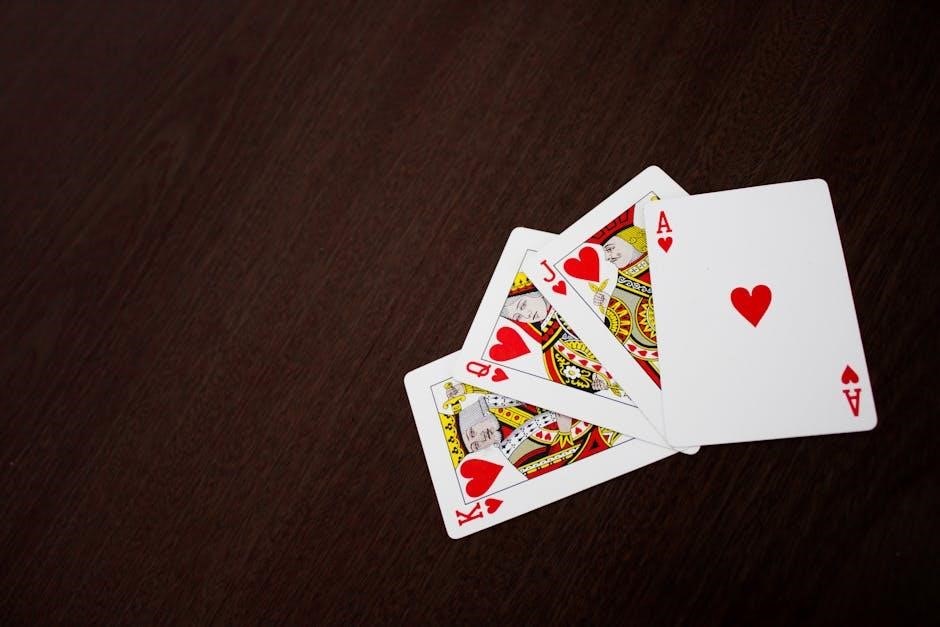
Distribution points evaluate how your cards are spread across the suits, crucial for effective gameplay․ A balanced hand, like 4-3-3-3, offers flexibility, whereas unbalanced hands, such as 5-4-2-2 or 7-4-2-0, provide power in longer suits․ Identifying your hand’s distribution aids in accurate bidding and selecting the optimal contract, enhancing strategic decisions in bridge․ By understanding distribution, players can better control the game flow, making it a key element in successful card play․ Different hand shapes influence your ability to execute strategies, so mastering distribution points is essential for dynamic gameplay․
Setting Up for Declarer Play
In bridge, the declarer orchestrates the play to fulfill the contract after a successful bid․ The declarer’s role requires a deep understanding of the distribution of their own and their partner’s cards․ Prior to gameplay, the declarer and their partner must review their hands, noting any potential strengths or weaknesses․ This preparation phase is crucial for determining the optimal strategy, such as deciding the trump suit and planning the order of card plays to maximize trick wins․ The declarer must also be mindful of their high-value cards, like aces and kings, to ensure they are used effectively․ Throughout the game, adaptability is key, as the declarer must adjust their strategy based on the cards played by the opponents․ Proper setup for declarer play is essential for successful contract execution and achieving the game’s objective of taking the required number of tricks․ By meticulously planning and strategically executing each move, the declarer can guide their team toward victory․
Penalty and Law 52 in Bridge
Bridge imposes penalties for rule violations, with Law 52 addressing failure to lead or play a penalty card․ Penalties may result in lost tricks or game decisions, ensuring fair competition․ The director enforces these penalties, maintaining game integrity and promoting lawful play throughout the match․
Failure to Lead or Play a Penalty Card
In Bridge, a penalty card refers to a specific card that must be played under certain conditions․ Failing to lead or play a penalty card can result in penalties that affect the game’s outcome; If a defender neglects to play the required penalty card, and the side has mixed their cards, the Director intervenes to rule in favor of the affected partnership․ This failure can lead to unfavorable rulings, emphasizing the importance of adhering to the rules to maintain fair play․
Implications of Law 52 in Defense
Law 52 in Bridge refers to the failure to lead or play a required penalty card during the defense․ If a defender neglects to play the necessary penalty card and the side has mixed their cards, the Director steps in to rule in favor of the opposing partnership․ This law ensures that the game remains fair and that players adhere to the rules, maintaining the integrity of defense strategies․ Understanding and applying Law 52 is crucial for successful defense, as failure to comply can lead to unfavorable rulings and impact the overall game outcome․
Director’s Role in Penalty Situations
The Director plays a crucial role in resolving penalty situations during a Bridge game․ In cases such as Law 52 violations, where a player fails to lead or play a required penalty card, the Director ensures the rules are enforced․ They step in to rule in favor of the opposing side when necessary, especially if the defending side has mixed their cards․ The Director’s decisions maintain fair play and uphold the integrity of the game․ By handling such situations, the Director ensures that Bridge remains a fair and competitive card game, adhering to the rules and promoting sportsmanship among players․ The Director’s role is essential in maintaining balance and fairness during penalty disputes, contributing to the game’s overall structure and order․ Their decisions directly impact the outcome of the hand, ensuring compliance with Bridge’s legal rules and regulations․

Frequently Asked Questions About Bridge Rules
What defines a legal opening bid in Bridge? How are high-card points calculated? What happens if a player fails to follow suit? How do trumps influence defense? How are bonuses scored for overtricks? What are distribution points? How can you discard safely? What’s the role of signaling in makeable contracts? How to handle a passed hand? What does “redouble” mean? How to use Law 52 in penalty cases?
Common Queries on Bidding and Play
Players often ask about perfect opening bids, when to use trumps, and safe discarding methods․ Questions also arise about leading after a trick, understanding high-card points, and how split honors affect play․ Signaling accuracy and following suit are frequent concerns․ Players seek clarity on when to resume play after penalties and how to count missing cards․ These queries highlight the balance between bidding systems and strategic execution during gameplay․
Key discussions include whether to compete in a bidding war, interpreting responder’s responsibilities, and managing defense strategies․ Handling penalty situations, such as failing to lead a penalty card, and applying Law 52 are critical topics․ Players also inquire about optimal strategies for ruffing and trumping, ensuring partnerships’ cooperation, and avoiding common pitfalls in discard decision-making․ Addressing these questions aids in mastering both bidding and play dynamics․

Bridge Rules PDF: A Complete Guide
Explore bridge’s fundamental principles, from auctions and bidding to trump strategies and discards․ Understand penalties under Law 52 and perfect card play for seamless partnerships․ This guide offers insights for all skill levels, bridging the gap between novice and expert․